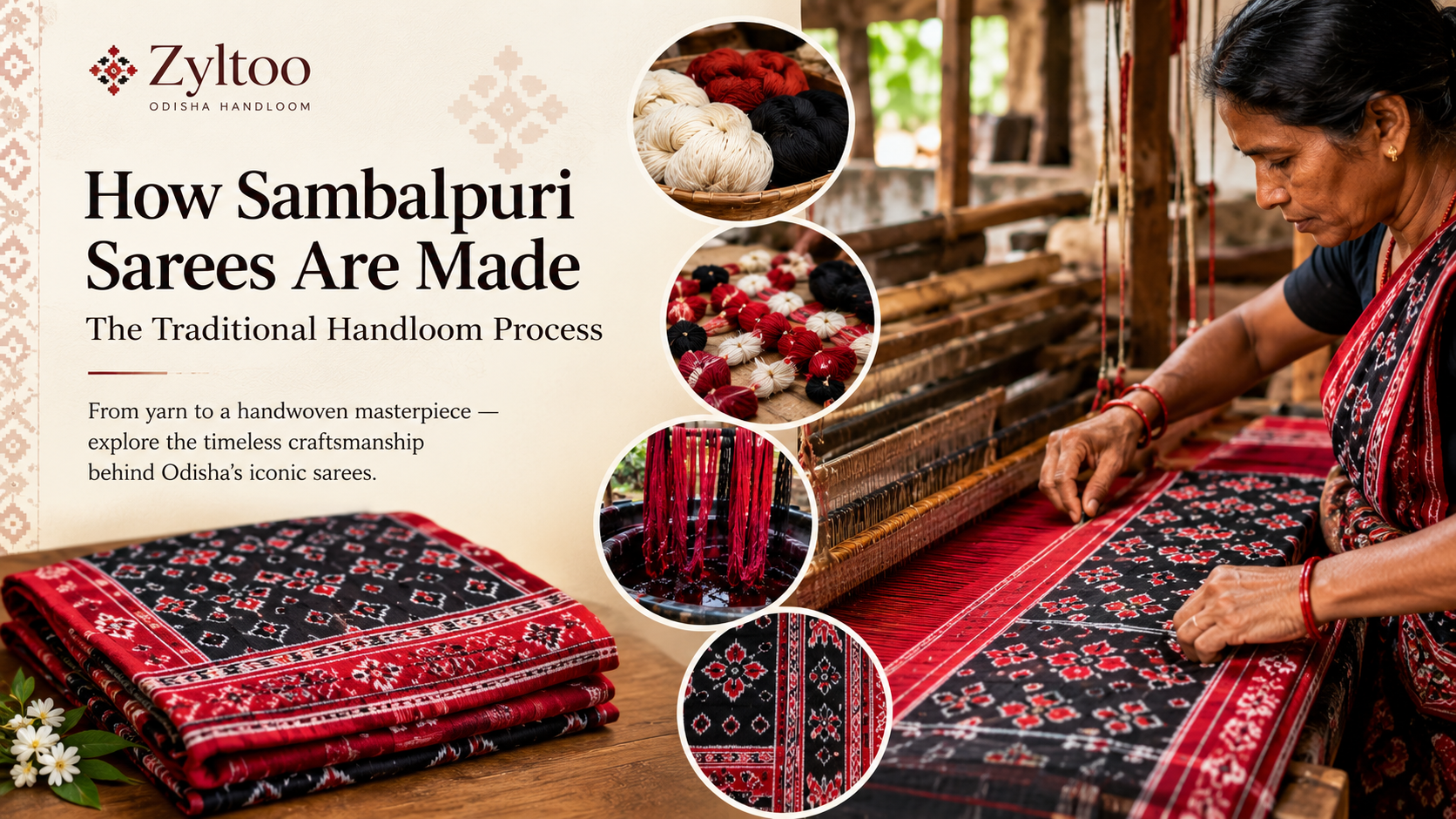
A Sambalpuri saree is not simply a piece of clothing. It is the result of patience, skill, detailed planning, and generations of weaving knowledge passed down through Odisha's handloom communities.
The distinctive patterns found on Sambalpuri sarees are created through a traditional resist-dyeing technique known as Bandha, commonly associated with the Ikat tradition. Unlike printed designs, the patterns are planned and created through the yarn itself before the final fabric is woven.
This makes the making of a Sambalpuri saree a fascinating journey—from preparing the yarn to carefully weaving the final design on a handloom.
In this blog, let's explore how Sambalpuri sarees are made and understand the craftsmanship behind one of Odisha's most recognised handloom traditions.
The distinctive patterns found on Sambalpuri sarees are created through a traditional resist-dyeing technique known as Bandha, commonly associated with the Ikat tradition. Unlike printed designs, the patterns are planned and created through the yarn itself before the final fabric is woven.
This makes the making of a Sambalpuri saree a fascinating journey—from preparing the yarn to carefully weaving the final design on a handloom.
In this blog, let's explore how Sambalpuri sarees are made and understand the craftsmanship behind one of Odisha's most recognised handloom traditions.
1. Selecting and Preparing the Yarn
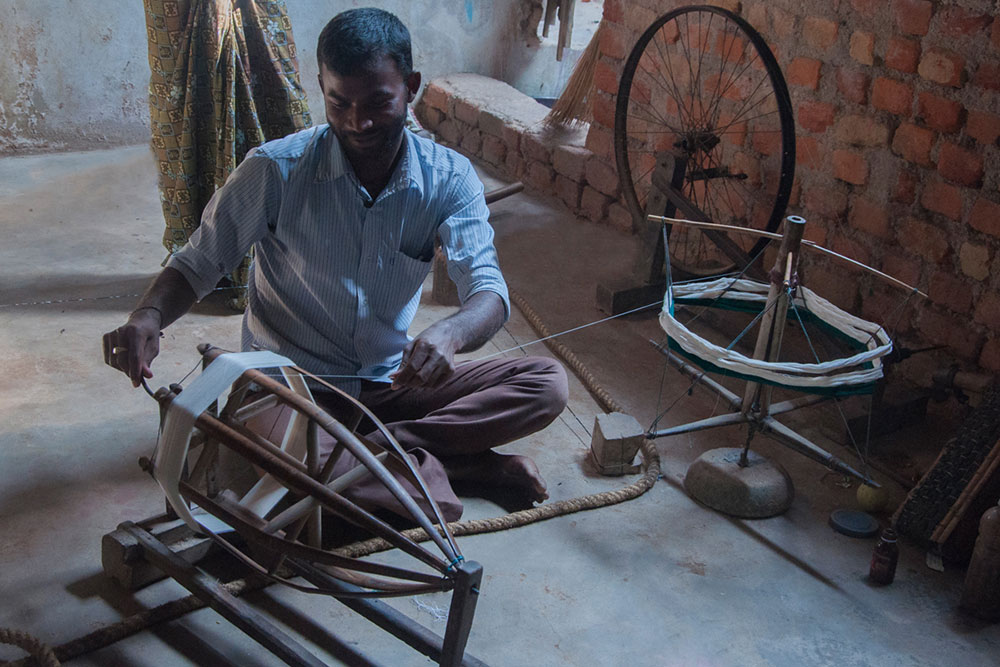
The process begins with selecting suitable yarn according to the type of saree being created.
Depending on the design and fabric, weavers may work with cotton or silk yarn. The yarn needs to be properly prepared before it can be used for dyeing and weaving.
The preparation stage is important because the quality and condition of the yarn influence the final texture, strength, and appearance of the saree.
For a handwoven saree, every stage requires careful attention because the final fabric depends on the quality of work done at each step.
The process begins with selecting suitable yarn according to the type of saree being created.
Depending on the design and fabric, weavers may work with cotton or silk yarn. The yarn needs to be properly prepared before it can be used for dyeing and weaving.
The preparation stage is important because the quality and condition of the yarn influence the final texture, strength, and appearance of the saree.
For a handwoven saree, every stage requires careful attention because the final fabric depends on the quality of work done at each step.
✦
✦
2. Planning the Design
Before the yarn is dyed, the design of the saree needs to be carefully planned.
Traditional Sambalpuri designs often feature motifs inspired by Odisha's cultural and natural heritage. Depending on the saree, the design may include traditional geometric patterns, flowers, animals, birds, or other cultural motifs.
The weaver has to determine how the design will appear on the finished fabric and how the individual threads need to be arranged.
This is one of the most skilled parts of the process.
The design is not simply added to the fabric after weaving. Instead, it is incorporated into the yarn arrangement itself.
Before the yarn is dyed, the design of the saree needs to be carefully planned.
Traditional Sambalpuri designs often feature motifs inspired by Odisha's cultural and natural heritage. Depending on the saree, the design may include traditional geometric patterns, flowers, animals, birds, or other cultural motifs.
The weaver has to determine how the design will appear on the finished fabric and how the individual threads need to be arranged.
This is one of the most skilled parts of the process.
The design is not simply added to the fabric after weaving. Instead, it is incorporated into the yarn arrangement itself.
✦
3. Creating the Bandha Design
One of the defining parts of Sambalpuri weaving is the Bandha technique.
In this process, specific sections of the yarn are tied or resisted according to the planned design. These tied portions prevent the dye from reaching particular areas of the yarn.
The process requires precision because the position of the tied sections determines how the pattern will eventually appear.
A small error during this stage can affect the alignment of the design when the yarn is woven.
This is why the Bandha process requires considerable skill and experience.
One of the defining parts of Sambalpuri weaving is the Bandha technique.
In this process, specific sections of the yarn are tied or resisted according to the planned design. These tied portions prevent the dye from reaching particular areas of the yarn.
The process requires precision because the position of the tied sections determines how the pattern will eventually appear.
A small error during this stage can affect the alignment of the design when the yarn is woven.
This is why the Bandha process requires considerable skill and experience.
✦
4. Dyeing the Yarn
After the yarn has been prepared and tied according to the design, it is dyed.
The protected sections resist the dye, while the exposed sections absorb it.
Depending on the design, the yarn may go through multiple stages of tying and dyeing to create different colours and patterns.
This is what gives Ikat and Bandha textiles their characteristic appearance.
The colour combinations can range from traditional deep shades to more contemporary combinations, depending on the design being created.
After the yarn has been prepared and tied according to the design, it is dyed.
The protected sections resist the dye, while the exposed sections absorb it.
Depending on the design, the yarn may go through multiple stages of tying and dyeing to create different colours and patterns.
This is what gives Ikat and Bandha textiles their characteristic appearance.
The colour combinations can range from traditional deep shades to more contemporary combinations, depending on the design being created.
✦
5. Removing the Ties
Once the dyeing process is completed, the tied portions of the yarn are carefully opened.
The dyed and undyed sections reveal the planned pattern within the yarn.
At this stage, the yarn begins to show the design that will eventually become visible in the woven saree.
However, the final result still depends on how accurately the prepared yarn is positioned on the loom.
Once the dyeing process is completed, the tied portions of the yarn are carefully opened.
The dyed and undyed sections reveal the planned pattern within the yarn.
At this stage, the yarn begins to show the design that will eventually become visible in the woven saree.
However, the final result still depends on how accurately the prepared yarn is positioned on the loom.
✦
6. Setting the Yarn on the Handloom
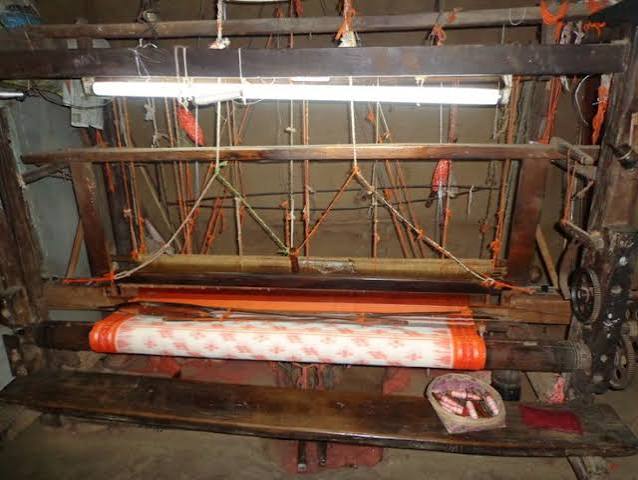
The prepared yarn is then arranged on the handloom.
This stage requires careful alignment.
The warp and weft yarns must be positioned correctly so that the planned motifs and patterns meet during weaving.
For complex designs, maintaining the correct alignment can be particularly demanding.
The weaver's experience plays an important role in ensuring that the design develops correctly throughout the length of the saree.
The prepared yarn is then arranged on the handloom.
This stage requires careful alignment.
The warp and weft yarns must be positioned correctly so that the planned motifs and patterns meet during weaving.
For complex designs, maintaining the correct alignment can be particularly demanding.
The weaver's experience plays an important role in ensuring that the design develops correctly throughout the length of the saree.
✦
7. Weaving the Saree
Now comes the stage where the saree gradually takes shape.
The weaver operates the handloom and interlaces the yarns to create the fabric.
With every movement of the loom, the dyed yarns come together to form the intended patterns.
Unlike a printed design, the pattern is integrated into the textile through the arrangement and dyeing of the yarn.
The saree slowly develops from individual threads into a complete handwoven fabric.
Now comes the stage where the saree gradually takes shape.
The weaver operates the handloom and interlaces the yarns to create the fabric.
With every movement of the loom, the dyed yarns come together to form the intended patterns.
Unlike a printed design, the pattern is integrated into the textile through the arrangement and dyeing of the yarn.
The saree slowly develops from individual threads into a complete handwoven fabric.
✦
8. Creating the Border and Pallu
The border and pallu are important visual elements of a Sambalpuri saree.
Depending on the design, the border may contain traditional patterns or geometric elements, while the pallu can feature more elaborate motifs.
The weaver must maintain consistency while transitioning between different sections of the saree.
This requires careful control of the loom and close attention to the design throughout the weaving process.
The border and pallu are important visual elements of a Sambalpuri saree.
Depending on the design, the border may contain traditional patterns or geometric elements, while the pallu can feature more elaborate motifs.
The weaver must maintain consistency while transitioning between different sections of the saree.
This requires careful control of the loom and close attention to the design throughout the weaving process.
✦
✦
9. Finishing the Saree
After the weaving is complete, the saree goes through finishing and inspection.
The finished textile is checked for its overall appearance, weaving quality, and consistency.
Any necessary finishing work is completed before the saree is ready to be folded, packaged, and presented to the customer.
What looks like a simple six-yard saree is therefore the result of numerous carefully executed steps.
After the weaving is complete, the saree goes through finishing and inspection.
The finished textile is checked for its overall appearance, weaving quality, and consistency.
Any necessary finishing work is completed before the saree is ready to be folded, packaged, and presented to the customer.
What looks like a simple six-yard saree is therefore the result of numerous carefully executed steps.
✦
How Long Does It Take to Make a Sambalpuri Saree?
The time required to make a Sambalpuri saree can vary significantly.
It depends on factors such as:
Type of yarn
Complexity of the design
Number of colours
Intricacy of the motifs
Size of the border and pallu
Weaving process
Skill and working method of the artisan
Simple designs may require less time, while highly detailed designs can require considerably more preparation and weaving.
This is one reason handmade handloom textiles have a different character from mass-produced fabrics.
The time required to make a Sambalpuri saree can vary significantly.
It depends on factors such as:
Type of yarn
Complexity of the design
Number of colours
Intricacy of the motifs
Size of the border and pallu
Weaving process
Skill and working method of the artisan
Simple designs may require less time, while highly detailed designs can require considerably more preparation and weaving.
This is one reason handmade handloom textiles have a different character from mass-produced fabrics.
✦
Why Every Handwoven Saree Can Be Slightly Different
One of the beautiful characteristics of handloom textiles is that each piece can have subtle variations.
Small differences in texture, colour, or pattern alignment may occur because the saree is created through a human-led weaving process.
These variations can be part of the character of a handmade textile.
Rather than being produced as identical pieces on an industrial production line, each handwoven saree carries the work and craftsmanship involved in its creation.
Sambalpuri Saree: Tradition Woven Into Every Thread
The making of a Sambalpuri saree combines several skills—design planning, yarn preparation, resist dyeing, colour management, loom setting, and weaving.
The Bandha technique is particularly important because the design begins at the yarn stage rather than being simply printed onto an already woven fabric.
This traditional approach is one of the reasons Sambalpuri textiles have such a distinctive visual identity.
Behind every saree is not just a finished product, but a process of craftsmanship that connects the textile to Odisha's rich handloom heritage.
One of the beautiful characteristics of handloom textiles is that each piece can have subtle variations.
Small differences in texture, colour, or pattern alignment may occur because the saree is created through a human-led weaving process.
These variations can be part of the character of a handmade textile.
Rather than being produced as identical pieces on an industrial production line, each handwoven saree carries the work and craftsmanship involved in its creation.
Sambalpuri Saree: Tradition Woven Into Every Thread
The making of a Sambalpuri saree combines several skills—design planning, yarn preparation, resist dyeing, colour management, loom setting, and weaving.
The Bandha technique is particularly important because the design begins at the yarn stage rather than being simply printed onto an already woven fabric.
This traditional approach is one of the reasons Sambalpuri textiles have such a distinctive visual identity.
Behind every saree is not just a finished product, but a process of craftsmanship that connects the textile to Odisha's rich handloom heritage.